
Stocks of small- and mid-cap companies continued to gain ground in July, notwithstanding analysts sounding caution on these two market segments given the sharp run thus far in calendar year 2023 (CY23). Sanjeev Prasad, co-head of Kotak Institutional Equities, in a note co-authored with Anindya Bhowmik and Sunita Baldawa in June-end, had cautioned against the sharp run in small- and mid-caps. "We do not see any particular reason for the excitement in small- and mid-cap stocks.

The man who threw the petrol bomb was immediately overpowered, they said

A dear friend pays tribute to celebrated Urdu writer Qurratulain Hyder who passed into the ages on Tuesday

The suicides have involved more NEET aspirants than JEE. 'It's a make-or-mar situation.' 'Either you get into a government medical college, where the fee is much lower than in private institutes, or you don't make it.'

Brace for some warmth this winter as the India Meteorological Department (IMD) in its December-February forecast on Thursday said that the minimum and maximum temperatures could remain 'normal' to 'above normal' over most parts of Northwest and Northeast India. Both the minimum and maximum will remain below normal in Southern Peninsular and Central India in these winter months. While this could give some respite from the intense cold of North India, it could have a negative impact on the standing rabi crops if the temperature rise is unusual and abnormal.

The most common abuse happens in marriages in the confines of one's own home. Be it raising a hand on one's spouse without the slightest provocation, or abusing them without their consent, notes Aarti David.
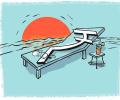
Leading economists have pencilled in a high 13-15.7 per cent uptick in the economy in the first quarter of 2022-23 with an upward bias. Soumya Kanti Ghosh, the group chief economic adviser at State Bank of India, on Tuesday said he expects the GDP to clip past 15.7 per cent in the first quarter with more chances of the final numbers printing in higher, while Aditi Nayar, the chief economist at the rating agency Icra, said the economy will grow much lower at 13 per cent in the June quarter. The national statistical office will announce the first quarter GDP numbers later next week.

India will either have to create a system in which certain geographical areas will wind up being permanent political outsiders at the Union level or it will have to create a system in which certain votes are weighted more heavily than others, observes Mihir S Sharma.

'India has always been a bottom-up stock-picking market, and as growth recovers with higher liquidity, mid and small-caps always tend to outperform.'

Auditors seem to have developed a heightened sense of risk and are not content to tick the boxes and sign the papers.

Despite fears of the Omicron variant, business activity touched an all-time high since the onset of the pandemic for the week ended December 12, a Japanese brokerage said on Monday. The Nomura India Business Resumption Index (NIBRI), which compares the activity for a particular week as against the one before the onset of the pandemic, rose to 115.8 from the 112.9 for the previous week. "Despite Omicron risks, neither policy restrictions nor public fear factor appear to have had any impact on mobility so far, which is supporting a further normalisation in services," it said in a statement.

It had meant nothing but moments of intimacy, sweet but transient moments. An intriguing excerpt from Manju Kapur's new novel The Gallery.

After a sharp outperformance in the mid-and small-cap segments in the first half of calendar year 2023 (H1-CY23), analysts are now turning cautious on these two market segments and suggest investors stay selective and look for valuation comfort and earnings visibility before investing. The S&P BSE Midcap index has surged 13.7 per cent in H1-CY23, and the S&P BSE Small-cap index gained 12.7 per cent during this period, data shows. The S&P BSE Sensex, in comparison, has moved up 6.4 per cent.


With the markets scaling new highs, as many as 43 stocks from the Nifty50 index and 27 of the 30 scrips that are part of the S&P BSE Sensex are trading above their respective 200-day moving average (DMA). The 200-DMA is seen as one of the most relevant trend indicators by investors and traders, who believe that stocks and indices trading above this level possess strength and are likely to rally in the short to medium term, while the ones trading below this level are viewed as bearish and expected to see a sell-off. Wipro, UPL, Kotak Mahindra Bank, Hindalco, Infosys, Cipla, and Adani Enterprises are the only stocks from the Nifty50 pack that are still below their respective 200-DMA, the exchange data suggests.

Way before the rains arrived at Talwandi Sabo Power plant in Punjab, the one check the coal ministry was carrying out was the availability of coal stock with the generator. Talwandi Sabo Power Limited (TSPL), the 1,980-Mw thermal power plant of Sterlite Energy, part of the Vedanta Group, which supplies about 15 per cent of Punjab's power, is one of the most difficult locations to manage coal supplies. It is nearly 1,700 km from the mines of Mahanadi Coalfields in Odisha, the longest coal route in India and possibly the trickiest as it cuts through the traffic heavy rail lines between Delhi and eastern India.

Companies, which missed out on listing earlier, are giving it another shot but with significantly-reduced issue sizes. In the recent past, companies such as TVS Supply Chain Solutions, Suraj Estate Developers, and ESAF Small Finance Bank have re-filed their draft red herring prospectuses (DRHPs) with the Securities and Exchange Board of India (Sebi). This came after they slashed their issue sizes by 20-60 per cent.

Indians supposedly have the right to freedom, and the right to equality, which cuts across gender, religion, sexual orientation, etc, observes Devangshu Datta.

The rupee rose by 12 paise to close at 79.78 against the US dollar on Monday due to a weak dollar in overseas markets and an improved appetite for riskier assets. Stronger regional currencies also supported the rupee sentiment ahead of the US Fed policy decision on Wednesday. Weak domestic equities and FII outflows, however, capped sharp gains. At the inter-bank forex market, the local unit opened at 79.86 against the greenback and moved in a range of 79.70 to 79.87 in the day trade.

Untimely rains during March have caused damage to rabi crops and may result in lower yields, a report said on Wednesday. Between March 1 and 21, cumulative rains have been 20 per cent more than normal, and in the past four days, it was 3-4 times more than usual, according to a report by Crisil Market Intelligence and Analytics. On March 21, the rain volume in central India was 1,600 per cent more than normal, the report said, adding that unfortunately, this ongoing harvest window for rabi crops has been lashed by an untimely torrent.

Do you have financial planning queries? Ask rediffGURU Kirtan A Shah.

'The government should act proactively to instil confidence in the private investors, and also boost the purchasing power of people directly or indirectly by ensuring minimum wages.'

How many of the apps downloaded in India deliver the GPT technology they say they are?
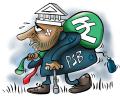
In FY23, the State Bank of India (SBI) reported a 57.4 per cent jump in its net profit to Rs 55,684.17 crore. But the chairman of the country's largest bank, Dinesh Khara's annual pay for this creditable performance was just Rs 37 lakh (his peers at state-run banks are no better off). Look at his private bank rivals - most pocketed in excess of Rs 7 crore annually - plus stock options.

The pilot project for central bank digital currency (CBDC) in the retail segment went live on Thursday with the Reserve Bank of India (RBI) issuing Rs 1.71 crore to four participating banks based on their indents. The central bank has identified four banks for the first phase of the pilot - State Bank of India, ICICI Bank, Yes Bank and IDFC First Bank - in four cities, Mumbai, New Delhi, Bengaluru and Bhubaneswar. The highest indent was received from one private sector bank.

A rare 18th century decorated gun made in India for Mysore ruler Tipu Sultan, and valued at around GBP 2 million, has been barred from export to allow time for a UK-based institution to acquire it for the public study of a "fraught period" in India-UK history.
The meeting lasted for half an hour with Khushwant taking his legendary chair by the fireplace and the President, the chair meant for the guests.
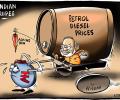
What could be more uncertain than Virat Kohli's agonising wait for a century for over two years? Perhaps it's what you will pay tomorrow morning to fill your vehicle's tank. Pump prices have joined cricket scores as the country's favourite discussion topic. Steep increases invite widespread protests, while moderate additions make the government anti-reformist. The ongoing fuel price conundrum is no different.

Shreekant Sambrani remembers P R S 'Biki' Oberoi, personal friend and hospitality icon, who passed into the ages this week.

Only a few thousand chargers dot the Indian landscape, some in working condition, others not, with some held hostage to the power supply vagaries of local utilities, reports S Dinakar.

Ahead of Diwali festival, the Union Cabinet on Wednesday increased the dearness allowance (DA) and dearness relief by 4 per cent effective July 1, 2022, benefiting 41.85 lakh central government employees and 69.76 lakh pensioners. The additional instalment of DA and dearness relief (DR) is an increase of 4 per cent over the existing rate of 34 per cent of basic pay/pension. The combined impact on the exchequer on account of both DA and DR would be Rs 12,852.5 crore per annum, said Information and Broadcasting Minister Anurag Thakur while briefing reporters about the decisions of the Union Cabinet.

"Over 50 files were created on Swamy's hard drive, including incriminating documents that fabricated links between him and the Maoist insurgency," the report said.

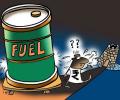
India has taken up the issue of high oil prices with producer nations and OPEC, demanding affordable rates, Minister of State for Petroleum and Natural Gas Rameswar Teli told the Lok Sabha on Monday. Petrol and diesel prices have shot up to record highs across the country after relentless price increases since early May. Petrol is retailing above Rs 100 a litre in more than a dozen states.

Eight of the 10 most valued companies suffered a combined erosion of Rs 2,48,372.97 crore in their market valuation last week in line with a weak broader market trend, with Reliance Industries taking the biggest hit. Last week, Sensex lost 2,041.96 points or 3.72 per cent. While Reliance Industries, Tata Consultancy Services, HDFC Bank, Infosys, ICICI Bank, State Bank of India, HDFC and Bharti Airtel were the laggards, Hindustan Unilever Limited and Kotak Mahindra Bank emerged as gainers.

A British brokerage on Tuesday cut India's FY22 GDP growth estimate by a sharp 0.80 per cent to 9.2 per cent, saying the economic impact of the second wave of infections has been deeper than initially expected. Barclays chief India economist Rahul Bajoria also mentioned the slow pace of vaccinations in the country and the rolling lockdowns across many states for the estimate. It can be noted that last month has seen a slew of similar forecasts from analysts, even as the RBI maintained its estimate of a 10.5 per cent growth in real GDP.

Ride-hailing app Uber is selling off its entire holding in Indian food delivery company Zomato for at least $373 million (Rs 2,939 crore) through a block deal of shares, merchant banking sources said on Tuesday. The development comes on a day when the Zomato scrip witnessed a nearly 20 per cent surge to close at Rs 55.60 apiece on the BSE. The sources said the offer price range for the deal to be carried out on Wednesday will be between Rs 48-54 per share.

'In her insecurity, she destroyed the institutions of democracy,' says Khushwant Singh.
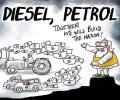
The Centre has garnered around Rs 2,500-3,000 crore in the first five weeks after it imposed a windfall tax on oil and gas companies for the export of fuel, Business Standard has learnt. It is likely that the government will continue with the one-time tax till the Indian crude basket is above $80 a barrel, sources said. The next review of the windfall tax on oil companies is early next week.
The global turmoil in the banking sector has made analysts cautious, who advise that investors stay away from stocks of this sector till the overall sentiment improves. The recent trouble for the banking sector started with the collapse of US-based Silicon Valley Bank (SVB), Silvergate Capital and Signature Bank. On its part, Moody's Investors Service has also cut its outlook for the US banking system to 'negative' from 'stable', citing the run on deposits at these three banks that led to the collapse of these banking majors in less than a week.
